About Pythic Cosmos
The name comes from the Pythia, the oracle of Delphi. For centuries people climbed Mount Parnassus to put their questions to her. The site was sacred long before Apollo arrived. In myth it was guarded by Python, the great serpent of the earth, and the oracle kept its name. Pythic Cosmos carries that thread: the sky asked carefully, and the answer read with care.
The serpent runs through everything we make. In the ancient world the snake was a healer. It is the emblem coiled around the staff of Asclepius, and its shed skin was a sign of renewal. It is also the Ouroboros, the serpent swallowing its own tail. That is the oldest image of cycles that end only to begin again, the same returns we follow in transits, lunations and retrogrades.
We also look to Hypatia of Alexandria, the mathematician, astronomer and philosopher who taught there at the turn of the fifth century. In her world, studying the heavens wasn't separate from understanding ourselves. Astronomy, mathematics and philosophy were one search for how cosmos and earth are bound together.
So every chart, aspect and transit here is computed precisely, down to the arcminute, and then read through astrology's long tradition as a language for meaning. Precise calculation and careful reading belong together.
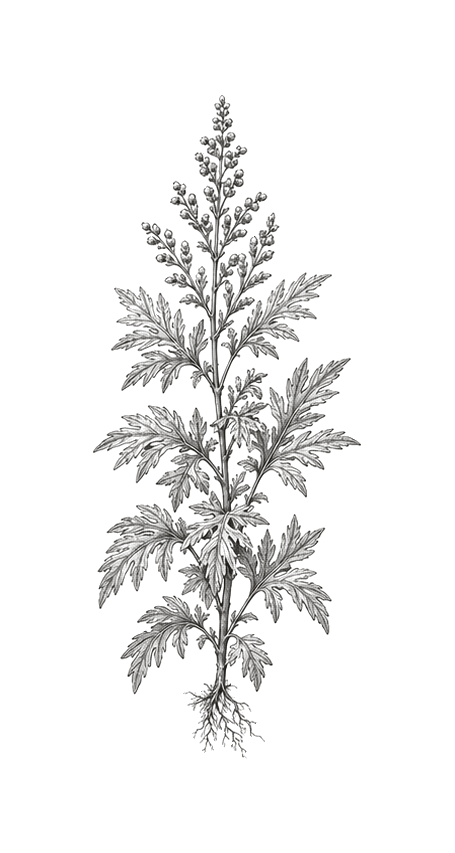
The botanicals come from the old herbals, which matched each plant to the planet said to rule it. They're a reminder that the sky was once read alongside the soil.
Our reports are for study, reflection and self-understanding. We hope they help you notice the patterns overhead and how they echo in your own life.